
RX(Robotics Transformation)
RX
RX Trend
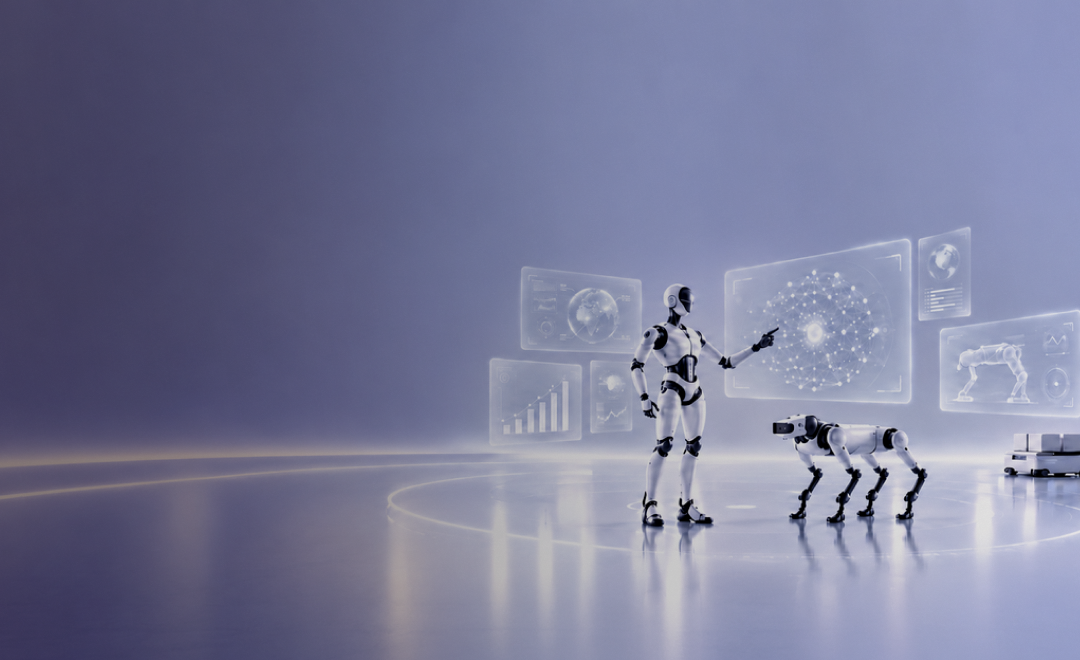
As the era of robots replacing human labor is no longer a distant future but an emerging reality, Physical AI-based Robotics Transformation (RX) is emerging as a key trend that is fundamentally changing how work is done across industries.
While Generative AI has transformed information generation and decision-making, the paradigm is now expanding from “thinking AI” to “acting AI” with the emergence of Physical AI, which extends beyond Agentic AI to directly engage with the physical world. In particular, in 3D industries (Dirty, Dangerous, Difficult) such as manufacturing, logistics, and construction, the adoption of humanoid-based intelligent robots is rapidly expanding as an alternative to chronic labor shortages.
At the center of this shift are humanoid robots with general-purpose intelligence. In the past, robots were automation equipment specialized for specific processes, but Physical AI-based robots are evolving into a “general-purpose workforce” that can understand and reason about physical environments and perform various tasks. With AI technologies such as Vision-Language-Action (VLA) models being combined, robots are rapidly gaining the ability to learn human movements and adapt to various environments. This is expanding the possibility of human-level task execution in physical spaces, much like Generative AI enables natural conversations with humans.
However, for application in industrial sites, robots need not only improved hardware performance, such as payload capacity and battery life, but also continuous advancement of task performance through fine-tuning using field data, similar to human on-the-job training (OJT).
To successfully implement Physical AI-based RX going forward, it will become important to go beyond simply introducing robot hardware and implement a system for managing and operating robots as a single “Workforce.” In other words, a “robot Workforce operations system” is becoming essential. It continuously advances the Robot Foundation Model (RFM) based on field data and assigns and manages tasks for robots in a way similar to an HR system. An operations platform that can respond to field issues in real time and reassign tasks will also become a key source of competitiveness by maximizing robot utilization.
Ultimately, RX is expected to go beyond simple automation and act as a game changer that reshapes productivity and industrial structures by creating a new labor paradigm where humans and robots work together.
All-in-One platform for managing data
and RFM training for Physical AI robot learning
How Forge accelerates robot learning

High-speed learning data collection
Forge uses various data collection and generation technologies, including teleoperation data collection, human video, world models, and simulation, to quickly secure large volumes of robot learning data and significantly reduce the time and cost required for RFM training.

Automated data quality management
Through automated data curation, Forge reduces the manpower and time required for data cleansing and improves the quality of training data. It automates data filtering and preprocessing to secure data quality and maximize RFM task performance.

One-click automated training
Data collection, cleansing, training, and verification processes that were previously separated across multiple tools can be easily executed through one interface and a preconfigured environment, reducing the time needed to prepare for training. This reduces the burden of complex setup and deployment, enabling faster and more efficient training preparation and execution.

High-quality simulation
Forge reduces the gap between simulation and real-world environments, helping robots adapt more quickly to various tasks and environments using simulation data. By automating the verification, calibration, and retraining cycle, it reduces trial and error and operational burden, and implements a more stable and scalable training environment.

Efficient operation of training infrastructure
Forge improves the efficiency of GPU and training resource usage, helping maintain stable infrastructure operations even as the scale of training increases. It reduces unnecessary resource waste, maintains performance in large-scale training environments, lowers operating costs, and establishes a predictable operating foundation.
FAQ
-
Robot learning projects do not end with simply creating a model. Different work environments at each site, repeated data collection, gaps between simulation and real-world environments, and repeated verification and retraining often slow down actual field application. Forge connects the process from data collection to training, verification, and field application preparation into a single flow, helping robots be applied to real-world environments more quickly.
-
Many teams already operate their own training environments and workflows. However, in actual field environments, operational issues such as data management, repeated verification, model tracking, deployment preparation, and simulation-to-real iteration quickly become complex. Rather than forcing a specific model or training method, Forge focuses on reducing these repetitive operational issues and making the field application process more efficient.
-
It is often difficult to secure enough diverse situations using only real-world field data. Forge supports repeated verification and field application processes by using simulation-based data together with real-world operational data. This makes it possible to review more work conditions and exceptions before applying robots to real-world environments.
-
If Forge is responsible for training and verifying the RFM that serves as the robot’s brain, Baton is responsible for robot field operations and orchestration. Operational data and exceptions generated in the field can be reflected back into the training process, helping robots continuously adapt to real-world work environments.
Integrated platform for orchestrating robots of different types
from multiple manufacturers into a unified workforce
How Baton improves robot operational efficiency

Integrated Workflow for robots and equipment
Baton connects robots and equipment into a single Workflow and supports robot operations to execute Work Orders. It analyzes robots, equipment, task priorities, and resource status to optimize operations and respond efficiently to various exceptions.

Rapid deployment of new robots to the field
New robots can be quickly connected, verified, and deployed immediately in the field. Through standardized integration methods, companies can reduce the time and trial and error required to introduce new robots, while securing stability and scalability during field application.

Real-time integrated robot control
The location and status information of various robots, as well as CCTV, sensor, and equipment data, can be monitored together on a single screen. This enables early detection of abnormal situations and immediate response, improving operational stability and productivity.

Flexible modular architecture
Companies can selectively adopt only the functions they need from the platform according to the scale and operating conditions of the site where robots will be introduced, then expand in phases. After starting with minimal functionality, companies can flexibly expand according to the number of robots and scope of work, securing both cost efficiency and operational stability.

Real-time optimization based on situational awareness
Baton automatically optimizes operations by monitoring the status of operating robots, workflows, and site data in real time. Under normal conditions, it improves efficiency by optimizing resource allocation. In abnormal situations, it minimizes losses by adjusting task priorities.

Customized robot operations dashboard
Baton provides not only robot status information, but also robot-specific KPIs and performance information according to operational objectives. Key indicators such as productivity, throughput, utilization rate, and task delays can be monitored and improved.

Agentic AI-based execution
AI Agent analyzes Work Orders, priorities, and site conditions to automatically generate execution plans for each unit of robot work. It also dynamically adjusts task sequences and resource allocation according to changing conditions to support more efficient operations.
FAQ
-
Baton is suitable for companies that have already introduced multiple robots or plan to deploy various robots in the field. As the number of robots increases, it becomes more important to manage workflows, equipment integration, failure response, and operational efficiency together in an integrated system, rather than managing individual devices separately.
-
Baton is designed for environments where various types of robots operate together. Even when manufacturers, robot types, and roles differ, they must be managed as a single flow from the perspective of field operations. Baton supports integrated management of task status and operational flows in these heterogeneous robot environments. The actual scope of application needs to be reviewed based on robot interfaces, site systems, and operational objectives.
-
Existing simple control systems often stop at showing “where a robot is and what status it is in.” Baton goes beyond identifying robot status and considers workflows and operating conditions together. It connects robot location and status with task priorities, equipment conditions, and site conditions, helping operators make faster decisions and respond more effectively. In other words, Baton is not simply a system for monitoring robots. It is a platform for operating robots within on-site work.
-
Baton is designed for sites where existing work systems and equipment operate together, not environments where robots operate separately. In manufacturing and logistics sites, robot operations must be connected with Work Orders, equipment status, inventory flows, shipment schedules, and more to achieve real productivity improvement. Baton supports the design of robot operation workflows with these site system integrations in mind. The specific integration method may vary depending on the client’s system structure and operating scope.
-
Forge is responsible for the learning and verification required before robots are deployed in the field. Baton supports the stable operation of deployed robots within actual field work. By using the two products together, robot learning and field operations can be connected as a single flow instead of being separated. Operational data and exceptions generated in the field can be reflected back into learning and verification, helping implement a structure where the robot Workforce continuously adapts to real work environments.
Industrial robot solutions that can be quickly applied in the field
Robot Solution by Industry

Security: Autonomous robot patrol solution
Security sites are environments that must respond to low-frequency, high-risk events across large and unstructured spaces. Most of these areas require continuous patrol and monitoring, especially perimeter facilities, unmanned nighttime zones, and areas around equipment.
Physical AI is well suited for tasks such as facility and perimeter patrol, monitoring of unmanned nighttime zones, inspection of hazardous areas, and detection of abnormal signs such as intrusion, fire, and water leaks.
Based on vision, thermal, and acoustic anomaly detection data accumulated across diverse industrial facilities, PhysicalWorks provides security solutions that can be quickly deployed even in event-driven environments.

Logistics: Humanoid solution for logistics centers
Logistics sites are environments where workflows such as picking, sorting, transport, loading, and unloading are closely interconnected, and work conditions continue to change in response to changes in goods and demand.
Physical AI is well suited for logistics operations such as picking and packing, sorting, loading and unloading, transport, and inventory movement within warehouses.
Drawing on workflow and movement-path data accumulated across a wide range of logistics sites, PhysicalWorks provides logistics automation solutions that can be rapidly deployed even in highly variable environments.

Manufacturing: Factory humanoid solution for precision tasks
Manufacturing sites are environments where connectivity between processes and adaptability to product variations are important, with both repetitive and unstructured tasks performed together.
Physical AI is well suited for manufacturing tasks such as assembly and work assistance, quality inspection, inter-process transfer, and adaptation to work environments.
Based on work and process data accumulated across a wide range of manufacturing processes, PhysicalWorks provides automation solutions that can be flexibly adapted to production environments with product variants.

Data Center: Robotic automation solution for data centers
Data centers require reliable 24/7 operation and rapid response to anomalies, with continuous physical inspection and status monitoring.
Physical AI is well suited for tasks such as server room and equipment inspection, rack status checks, cooling and power equipment monitoring, and anomaly detection.
Based on equipment inspection and operational data accumulated across diverse infrastructure environments, PhysicalWorks provides robotic automation solutions for data centers, enhancing stability and response speed.